What Does Life Path Number 1 Mean?
In Pythagorean-style numerology, Life Path 1 is commonly read through initiative, independence, self-direction, and beginning. It does not require a loud personality or visible leadership. A balanced interpretation asks when autonomy supports useful action and when the same pattern may harden into control, isolation, rigidity, or resistance to collaboration.
Here, the label is symbolic vocabulary for reflection rather than a measurement of character. It can help a reader name a preference, notice a recurring situation, or frame a question. It cannot establish why someone behaves a certain way, what they must become, or how any decision will turn out.
If you want to check the starting number, open Stellica's current birth-date Life Path preview. The form calculates a Life Path preview from a birth date. It does not promise a complete numerology profile, guaranteed leadership, compatibility, career direction, money outcomes, or certainty about identity.
Use the interpretation as a hypothesis to compare with ordinary evidence. Keep what gives you precise language, revise what oversimplifies your experience, and leave any mismatch visible. A useful reading makes room for context and choice instead of turning one number into a verdict. No single response is required here.
Life Path 1 at a Glance
Life Path 1 is commonly associated with moving from possibility into action. Words such as initiative, autonomy, originality, direction, and beginning describe the symbolic field. They do not require a loud temperament. A person can start something quietly, share ownership early, or work inside an established structure while still recognizing parts of this theme.

The familiar leader stereotype captures only one possible expression. Visible coordination may fit when a group wants someone to set an initial direction. Quiet ownership may fit when a person drafts the first version, learns independently, names an overlooked problem, or makes a small decision without waiting for approval. Neither expression is more authentic, advanced, or valuable.
| Theme | Constructive question | Context check |
|---|---|---|
| Initiative | What useful first move is available now? | Is starting more helpful than gathering another fact? |
| Autonomy | Which choice genuinely belongs to me? | Which people are affected and need a voice? |
| Originality | What approach is worth testing? | What existing knowledge should remain in view? |
| Direction | Can I state the purpose clearly? | Can the plan change when evidence changes? |
| Self-trust | What do I know well enough to decide? | Where would feedback improve the decision? |
The paired questions matter because every theme changes with setting. Independence can protect concentration or hide avoidable strain. Speed can restore momentum or close discussion too early. Originality can improve a method or dismiss lessons already learned. Direction can clarify responsibility or become control when other people cannot question it.
Try reading the number as a verb rather than a badge: begin, choose, propose, test, or clarify. Then add a second verb that keeps the action connected to reality: ask, listen, document, revise, or hand off. This pairing turns a broad symbol into an observable experiment without pretending that numerology caused the behavior.
For wider framework language, What Is Numerology? is marked Coming soon. That planned introduction can explain how symbolic number systems organize meaning. This article stays narrower: it examines one Life Path result without claiming that the theme is scientific, universal, or complete.
Before adopting any description, ask three questions. Does it identify a specific situation? Does it allow more than one expression? Can contrary evidence remain visible? If the answer is no, the wording is probably a stereotype rather than a balanced prompt. Life Path 1 becomes more usable when action and consultation are both available.
Revisit the note after a week: keep language that clarified a choice, revise language that narrowed the options, and discard language that did not match the evidence. No match is also a valid result and needs no symbolic repair.
Choose one recent example, describe the first move, note who could respond, and record what changed. Specific observations keep the theme grounded without turning recognition alone into proof.
Quiet initiative deserves the same evidence standard as visible leadership. Drafting the first outline, naming a missing constraint, asking the first clarifying question, or setting up a reversible test can all begin movement without placing one person above a group. Record the action and its effect instead of awarding a personality label. Then note whether others could revise the direction, whether the first move reduced uncertainty, and whether the work continued after the initial energy passed.
A useful Life Path 1 prompt therefore includes a repair path. Before acting, name what can be reversed, who needs notice, and when the choice will be reviewed. Afterward, keep objections and unintended effects in the record. Initiative remains a possible symbolic theme, but accountability comes from observable follow-through, consent, and revision—not from the number itself.
STELLICA APP
Stellica previewExplore your Life Path preview
Try the Life Path previewStrengths and Shadow Patterns
“Strength” and “shadow” are contextual labels, not two permanent sides of a person. The same preference can help in one moment and create friction in another. Review the action, the setting, who is affected, and what happened next before deciding which description fits.
Initiative Without Constant Performance
Initiative can mean making the first draft, asking the first useful question, arranging the first test, or naming a boundary. None of those acts requires a stage, title, or audience. The theme is about creating motion where waiting no longer adds value. It is not a demand to perform confidence continuously or to take charge whenever a group gathers.
A practical check is whether the first move makes later participation easier. A rough outline can invite response; a unilateral conclusion can prevent it. A prototype can reveal uncertainty; a polished announcement can conceal it. Ask what the action opens, not whether it looks impressive. That distinction protects initiative from becoming a competition for visibility.
Independence Without Isolation
Self-direction may support focus, privacy, and responsibility. It becomes costly when “I can handle this” quietly changes into “I must handle this alone” or “only my method is acceptable.” Isolation is not inherent to Life Path 1, and enjoying time alone is not evidence of a problem. The relevant question is whether connection remains available and chosen.
Use the middle checkpoint before calling a pattern strength or shadow. Was assistance possible? Did everyone have the information they needed? Could responsibility move when circumstances changed? These questions locate friction in a process instead of diagnosing a person from one number.
Confidence Without Rigidity
Confidence can shorten unnecessary delay and make a decision legible. Rigidity appears when protecting authorship matters more than updating the choice. A reader can test the difference by recording what evidence would change their mind before deciding. If no possible evidence qualifies, certainty may be closing the review process rather than supporting direction.
Listening does not require surrendering every preference. It means another person's information can alter timing, method, or scope when relevant. Likewise, revising a plan does not erase the initiative that began it. A flexible decision can still have a clear owner, deadline, and reason.
Starting Without Abandoning the Middle
Beginnings often receive attention because change is visible. Maintenance, documentation, and handoff may be quieter, yet they determine whether an idea remains useful. A balanced Life Path 1 prompt connects the first move to a finish condition: what will count as complete, who will sustain it, and when will impact be reviewed?
If novelty repeatedly displaces follow-through, reduce the next beginning to a size that can be completed. If maintenance feels invisible, name its value explicitly and share it. These are ordinary planning practices, not luck techniques. They simply make the symbolic theme observable enough to accept, reject, or refine.
A balanced reading pairs initiative with response, autonomy with support, confidence with revision, and starting with stewardship. These counterweights prevent flattering language from becoming certainty or shadow from becoming shame.
Life Path 1 in Relationships
Relationship readings are most useful when they describe a conversation, not a compatibility verdict. A Life Path number cannot rank partners, determine success, or explain consent and conflict. It may offer prompts about pace, autonomy, directness, listening, and shared decisions, all of which still require specific context.
Someone who recognizes the 1 theme may prefer to state needs plainly, keep some choices individual, or move quickly once a direction is clear. Those preferences can reduce guessing. They can also create friction if one person's pace quietly becomes the schedule for everyone or if “being direct” leaves no time for another response.
Use four questions to review a shared choice:
- What first move am I proposing, and why now?
- Has input been invited before the decision is effectively closed?
- Which part belongs to one person, and which part needs shared ownership?
- What impact will we review, and how can the lead be returned or redistributed?
The flow is not a script that every relationship must follow. Some decisions are private, some are delegated, and some need immediate action. Its purpose is to expose hidden assumptions: whether input was genuinely possible, whether ownership was agreed, and whether anyone can name an impact without being punished for slowing the pace.
Personal space is also not the same as loneliness. Chosen solitude may restore attention or protect a boundary. Loneliness describes an experience of insufficient connection, and its causes cannot be inferred from a Life Path result. Ask about the person's actual support, preferences, and circumstances instead of treating independence as destiny.
Compatibility language should remain secondary to lived evidence. No number can approve a partner, disqualify a pairing, or predict how conflict will unfold. Values, safety, consent, communication, history, and available support carry information that a symbolic result does not contain.
Repair matters after a shared decision as much as consultation before it. If the pace excluded someone, name that impact without defending the intention first. Ask what information arrived late, what ownership should change, and what would make the next invitation credible. This review turns initiative into an accountable practice while leaving every person free to disagree.
In everyday use, the balanced prompt is simple: keep room for an individual “I” and a negotiated “we.” Directness can coexist with listening. A first move can coexist with revision. Leadership can be requested for one moment and returned in the next. Those possibilities are more precise than a fixed relationship type.
Life Path 1 at Work
At work, Life Path 1 themes often point toward ownership, initiation, and room to shape a method. They do not prescribe entrepreneurship, management, or a prestigious role. A person can exercise autonomy within a structured team, while someone working independently may still depend on clients, peers, maintainers, and shared standards.
Ownership Without Control
Clear ownership answers who will make the next move, document it, and respond when conditions change. Control answers a different question: who is allowed to influence the work. A healthy arrangement can give one person responsibility while keeping review and correction available. The Life Path prompt is not “How can I command this?” but “What can I responsibly carry, and what information must stay shared?”
Small experiments make that question testable. Ask for a defined decision area, propose a first draft, or agree on a short trial. Record the outcome and the cost to others. Evidence from the experiment is more useful than assuming that every restriction is harmful or every independent role will fit.
Collaboration Without Disappearing
Collaboration does not require suppressing an idea until everyone agrees. It can mean stating a proposal clearly, inviting disagreement while revision is still possible, and distinguishing consultation from shared authority. Likewise, accepting input does not erase authorship. The practical goal is legible responsibility rather than either total control or total self-effacement.

Starting and Sustaining
New work can feel rewarding because its change is visible. Sustaining work often depends on documentation, maintenance, training, and careful handoff. If the 1 theme resonates most at the beginning, add a completion contract before starting: name the finish condition, review date, maintainer, and method for transferring knowledge.
This does not mean the same person must carry every phase. An initiator may contribute best by framing the problem and building a usable first version. Another contributor may strengthen, operate, or adapt it. Equal credit and clear handoff prevent “starting” from being treated as a higher form of work than sustaining.
Career decisions need evidence beyond symbolic resonance. Compare actual tasks, learning access, compensation, stability, schedule, safety, responsibilities, and labor conditions. A request for more autonomy might be tested through a revised workflow or project before a larger change. A Life Path description cannot tell someone which job to accept or leave.
Money outcomes are equally outside the number's reach. Initiative does not guarantee income, business success, promotion, or financial judgment. Use current figures, contractual details, risk information, and qualified support where appropriate. The symbolic question can help articulate a preference, but it cannot supply missing facts.
Track outcomes after handoff.
Calculation and System Boundaries
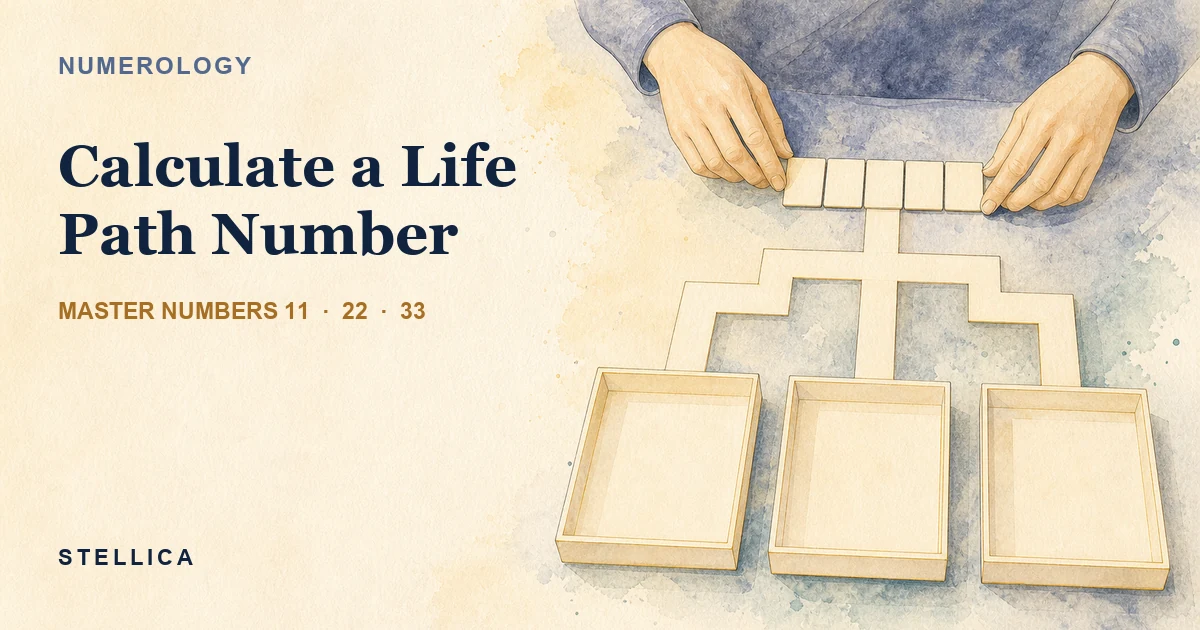
This article assumes the displayed result is already Life Path 1 and keeps calculation subordinate to interpretation. In the linked Pythagorean-style convention, a birth date is written as zero-padded YYYY-MM-DD, every digit is added, and the current total is checked after each sum. Values 11, 22, and 33 are retained when they actually appear in that forward trail.
For the complete procedure, worked examples, and reasons calculators may disagree, use How to Calculate a Life Path Number with Master Numbers. Do not reverse a single digit into a preferred compound value or mix grouping rules midway. The documented method owns the arithmetic; this page owns a balanced interpretation after the result is known.
Master Number 11 Meaning is marked Coming soon. Eleven is not simply a more developed version of 1, and a Life Path 1 result should not borrow its interpretation. Under the linked method, 11, 22, and 33 remain distinct retained results rather than ranks or evidence of unusual ability.
Pythagorean-style Life Path numerology also differs from Stellica's date-only Kabbalah convention. Both may begin with birth data, but they use different field names and procedures. Kabbalah Numerology by Birth Date documents that separate contract. A matching digit does not merge the systems or transfer meaning between them.
Stellica's current English numerology destination provides a birth-date Life Path preview only. It does not promise every numerology school, a complete profile, fixed traits, or predictions about relationships, work, money, health, or future events. Arithmetic can be reproduced within a stated convention; interpretation remains optional symbolic language, not scientific validation.
Keep three labels beside any saved result: input, method, and scope. Those labels make comparison possible without overstating what the number contains. If the input changes or another calculator follows a different rule, create a separate receipt rather than silently repairing one result with another system's logic.
Frequently Asked Questions
What does Life Path Number 1 mean?
Within Pythagorean-style numerology, Life Path 1 is associated with initiative, autonomy, self-direction, originality, and beginning. These themes are prompts, not measured facts about personality. Ask where taking a first step helps, where consultation matters, and whether the description matches specific experience rather than accepting a general label automatically. A useful match should describe an observed situation and remain open to revision when context changes.
Does Life Path 1 always mean leadership?
No. Visible leadership is one possible expression, not a requirement. The same theme may appear as quiet problem framing, independent learning, making a first draft, or taking responsibility for a defined choice. A title, audience, dominant style, or permanent role is unnecessary. Context and observable action matter more than the born-leader stereotype. Leadership can also move between people, so beginning an action does not create permanent authority.
What are its main strengths and shadow patterns?
Common strengths include initiative, clear direction, self-trust, and willingness to test an original approach. Related friction may include rigidity, closing feedback too early, holding work alone, or losing interest after a beginning. The pairings are contextual: the same independence can protect focus in one setting and obstruct collaboration in another. Review what improved, what narrowed, and whether another response would have produced a better outcome.
How might Life Path 1 appear in relationships?
It may provide language for directness, personal space, pace, and independent choices. A balanced reading also asks whether input arrives before decisions close, which choices need shared ownership, and how a temporary lead is returned. The number cannot rank compatibility, approve a partner, predict success, or replace communication, consent, safety, and lived evidence. Use the prompt to prepare a conversation, then let the other person's account change your understanding.
Is loneliness inherent to Life Path 1?
No. Independence, solitude, and loneliness are different experiences. Chosen solitude may support focus or rest, while loneliness concerns insufficient connection as a person actually experiences it. A Life Path result cannot identify the cause or prescribe a response. Ask about preferences, relationships, circumstances, and available support without turning isolation into destiny. If connection feels insufficient, practical support matters more than assigning that experience to symbolic independence.
Which work conditions may resonate without prescribing a career?
Some readers may value a clear responsibility area, room to begin or improve something, feedback without unnecessary control, and a culture where leadership can move. Those are conditions to test, not a career list. Skills, access, pay, schedule, safety, obligations, and labor realities provide stronger evidence for an employment decision. Test a condition through a limited responsibility or workflow change before treating it as a career requirement.
How is Life Path 1 different from Master Number 11?
They are distinct results under the linked calculation convention. Life Path 1 should not be promoted to 11 because an interpretation feels appealing, and 11 is not a higher-ranked form of 1. Preserve 11 only when it appears in the forward arithmetic. Interpret each result within its own disclosed scope rather than blending their themes. The shared digit does not create a shared contract, hierarchy, or automatic transfer of descriptive language.
How is Life Path 1 calculated?
Under Stellica's linked method, write the birth date as YYYY-MM-DD, add every digit, and check the current total. Stop at 1–9, 11, 22, or 33; otherwise add the current total's digits and check again. Save the full trail because other calculators may group date parts or retain compound values differently. A reproducible trail confirms arithmetic under one rule; it does not prove the attached interpretation.
Summary
Use Life Path 1 as a bounded reflection prompt, not an identity verdict. Name one situation, keep contrary evidence visible, and record the action, feedback, and impact before deciding whether the symbolism was useful.
- Life Path 1 centers initiative, autonomy, self-direction, and beginning as symbolic themes.
- Quiet ownership can express the pattern as clearly as visible leadership.
- Strength and shadow are contextual; independence can support action or resist collaboration.
- Relationships, work, money, and identity require real evidence beyond one number.